

Sustainability · 2025
In this section51 topics
- Sustainability Policy4 items
- Sustainability Goals & UN SDGs3 items
- Policy Review3 items
- Business Value Chain1 item
- Stakeholder Analysis1 item
- Environmental Policy & Guidelines5 items
- Environmental Policy Review3 items
- Energy — Plan & Guidelines2 items
- Energy — Electricity Consumption1 item
- Energy — Fuel Consumption1 item
- Energy — Targets2 items
- Energy — Performance & Outcomes2 items
- Water — Plan & Guidelines2 items
- Water — Withdrawal, Discharge & Consumption1 item
- Water — Targets2 items
- Water — Performance & Outcomes2 items
- Waste — Plan & Guidelines2 items
- Waste — Generation, Disposal & Recycling1 item
- Waste — Targets1 item
- Waste — Performance & Outcomes1 item
- GHG — Plan & Guidelines4 items
- GHG — Emissions2 items
- GHG — Emissions Verification4 items
- GHG — Principles & Standards1 item
- GHG — Targets1 item
- GHG Targets — Net Zero1 item
- GHG Targets — Carbon Neutrality1 item
- GHG — Performance & Outcomes2 items
- Environmental Legal Incidents1 item
- Other Environmental Management1 item
- Social Policy & Guidelines5 items
- Social Policy Review3 items
- Social — Principles & Standards Practised1 item
- Human Rights Due Diligence1 item
- Employees — Plan & Guidelines3 items
- Employees — Workforce1 item
- Employees — Remuneration & Provident Fund1 item
- Employees — Training & Development1 item
- Employees — Occupational Health & Safety1 item
- Employees — Labour Relations1 item
- Employees — Employee Representation1 item
- Employees — Targets1 item
- Employees — Performance & Outcomes2 items
- Customers — Plan & Guidelines3 items
- Customers — Satisfaction Results2 items
- Customers — Targets1 item
- Customers — Performance & Outcomes1 item
- Community & Social — Plan & Guidelines3 items
- Community & Social — Targets1 item
- Community & Social — Performance & Outcomes2 items
- Law Violation Incidents1 item
Sustainability Policy
Has a Sustainability Policy
Yes
Policy Description
Thai Auto Tools and Die Public Company Limited (the “Company”) and its subsidiaries (collectively referred to as the “Group”) realize the importance of corporate governance. One of the main goals of the Group is sustainable development. Thus, the Company has established a sustainable development policy as a guideline for business operations and strengthened the management structure and system to enable the Group to develop and grow into a stable and sustainable organization, covering every dimension such as the economy, society, environment, and respect for human rights. The Group has integrated the concept of sustainable development into the core of every step of its operations and disseminated the concept to various operational sections of the organization and integrated operational plans to ensure balance in the economic, social and environmental dimensions, as well as the supply chain, to achieve sustainable development and maximize the benefits for all stakeholders.
Policy Document Link
https://www.thaiautotools.co.th/public/pdf/1_1/1/15_en.pdf?4757
Page Number in Report
1
Sustainability Goals & UN SDGs
Has Sustainability Goals
Yes
Goals Description
The Board of Directors will oversee the Company’s objectives, goals, and strategies to be consistent with the Company’s business operations and sustainable development goals, with the following governance guidelines:
The Board of Directors will oversee the preparation of annual strategies and work plans consistently with the Company’s key objectives and goals while taking into account the impacts on the environment and society, covering respect for human rights and comprehensive good corporate governance, in addition to supporting the monitoring and reviewing of the implementation of the strategies and goals set in the short, medium and long term to ensure that the Company's strategies and plans achieve their objectives.
The Board of Directors will ensure that environmental conditions, factors and risks that may affect stakeholders, as well as the business value chain, are analyzed as part of the setting of the annual strategies and work plans. This includes considering various factors that may affect the Company's achievement of its main goals in all aspects and having a mechanism to truly understand the needs of stakeholders.
The Board of Directors will oversee to ensure the appropriate control of the Company's operations. This includes communicating the Company's main objectives and goals through strategies and work plans for employees
UN Sustainable Development Goals
| SDG Goal |
|---|
| Goal 3 Good Health and Well-being |
| Goal 5 Gender Equality |
| Goal 7 Affordable and Clean Energy |
| Goal 8 Decent Work and Economic Growth |
| Goal 12 Responsible Consumption and Production |
| Goal 13 Climate Action |
Policy Review
Policy Reviewed This Year
Yes
Policy Changed This Year
Yes
Review Details
3.1.1 Sustainability management goals
The Board of Directors will oversee the Company’s objectives, goals, and strategies to be consistent with the Company’s business operations and sustainable development goals, with the following governance guidelines:
The Board of Directors will oversee the preparation of annual strategies and work plans consistently with the Company’s key objectives and goals while taking into account the impacts on the environment and society, covering respect for human rights and comprehensive good corporate governance, in addition to supporting the monitoring and reviewing of the implementation of the strategies and goals set in the short, medium and long term to ensure that the Company's strategies and plans achieve their objectives.
The Board of Directors will ensure that environmental conditions, factors and risks that may affect stakeholders, as well as the business value chain, are analyzed as part of the setting of the annual strategies and work plans. This includes considering various factors that may affect the Company's achievement of its main goals in all aspects and having a mechanism to truly understand the needs of stakeholders.
The Board of Directors will oversee to ensure the appropriate control of the Company's operations. This includes communicating the Company's main objectives and goals through strategies and work plans for employees throughout the organization to acknowledge and implement.
3.1.2 Economic development
The Group is committed to developing a production system that can appropriately reduce production costs, whether in terms of operating costs or long-term benefits, in order to build the Company's business standards under the following guidelines:
Conduct business in accordance with the principles of good governance, the Company's code of ethics along with the policies, regulations, announcements and orders of the Company.
Adhere to the principles of virtue and transparency in business operations and activities, and comply with the laws, regulations, procedures and standards established by regulatory agencies and international practices.
Commit to offering the best products within the customer's budget to create maximum value.
Continuously seek ways to develop and improve operational efficiency in all activities, including creating, inventing and developing new innovations and technologies so that the Company has the qualities and capabilities to become a leader in the industry.
Choose modern technologies in production to serve as models for the industry.
Effectively manage risks in all aspects.
Encourage and support partners, trade partners and stakeholders throughout the entire business value chain to operate business in accordance with sustainable development guidelines.
3.1.3 Social Development
The Group is committed to building and supporting communities and society, as well as to create jobs and careers and distribute income to communities in order to create a sustainable society under the following guidelines:
Take into account the principles of human rights and human dignity while treating employees with fairness and equality without discrimination based on race, skin color, religion, sex, age, nationality, sexual orientation, or any other factors to ensure that employees have a good quality of life.
Create a culture of brotherly coexistence, mutual assistance, support and aid within the organization.
Take care of the health and safety of employees, workers, and the company's assets without affecting the rights and safety of others. This includes protecting personal rights, maintaining information confidentiality, disclosing information, and using personal information.
Continuously promote and develop the potential of personnel in the organization both in the short term and the long term.
Cooperate with government agencies and nearby communities to improve the well-being and environment of the community.
3.1.4 Environmental development
The Group focuses on conducting business that is environmentally friendly and takes into account the impact on the environment as a priority. The Group places importance on every step of the operation in accordance with the following guidelines:
Utilize various resources to the greatest extent possible, promote the use of solar energy as an alternative energy within the Company, and invent and seek ways and means to reduce the use of resources and energy, as well as reduce the emission of waste and greenhouse gases to prevent, control and minimize the impact on the environment, community and society.
Select production processes that create the least waste, create standards that are equal to or higher than those required by law, and seek new measures and methods to enhance the efficiency of environmental management and quality control.
Use technology to improve environmental management.
Create workplace standards that are convenient, clean, safe while maximizing green space.
Develop good corporate governance.
The group of companies has demonstrated its commitment to sustainability in the economic, social, and environmental dimensions through various policies, as reviewed by the Board of Directors meeting on November 14, 2025. The details are as follows:
Good corporate governance policy.
Business Ethics and Code of Conduct.
Risk management policy.
Social responsibility policy.
Anti-corruption policy.
Policy on the control of the use of inside information of the Company.
The above policies and practices are part of the Company's intention to achieve sustainability goals. All directors, executives and employees of the Company have a duty to support, drive, promote and comply with the sustainable development policy as specified, including encouraging business partners and allies to apply and adapt such policies in parts of their operations that are related to the Company to jointly create a sustainable society for stable growth.
Business Value Chain
Value Chain Description
The Group recognizes the importance of key stakeholder relationships in activities related to business operations from upstream to downstream. The Company is committed to creating value for products and services to meet the expectations of all stakeholders. Therefore, the Company has established a policy for managing impacts on stakeholders in the business value chain.
(Value Chain) to achieve sustainable development, create balance in economic, social, and environmental dimensions, as well as the supply chain, and bring maximum benefits to all relevant stakeholders.
Business Value Chain Management Approach (Value Chain)
1. Primary Activities of Business Value Chain Management
Inbound Logistics Management
As raw materials used to produce automotive parts are specified according to the requirements of various international standard car manufacturers, the sourcing locations for raw materials are clearly defined to control quality and ensure appropriate prices.
Operations
The Group is committed to developing production systems with modern machinery, incorporating automation such as robots into the production process, and implementing a Just-in-time Production system to manage and increase production efficiency (Productivity).
The Group's executives and employees continuously develop their knowledge through both internal and external training, enabling the company to compete with other companies.
Outbound Logistics
The Group has an inventory control system using the Kanban System, which enables efficient management of storage space and product delivery to meet customer requirements.
Marketing and Sales
As the Group prioritizes customers in terms of good quality, reasonable prices, and on-time delivery that meets customer needs as a core management principle, customers have continuously trusted in doing business with the Group.
Customer Services
The Group provides services to customers from the design and production process of metal stamping dies ( , Assembly Jigs , and checking fixtures, as well as improving product quality to customer satisfaction and delivering to customers on time.
Procurement
The Group adheres to business principles that consider business ethics, transparency, and fairness towards partners, as well as maintaining and fostering good relationships with partners and complying with commercial terms. The Company has established procurement orders and operational manuals for procurement to ensure transparency and serve as guidelines for relevant departments. Furthermore, the Group will not conduct any transactions with partners whose names are listed in the database of the Anti-Money Laundering Office. Additionally, the Group adheres to good competition rules and does not use dishonest methods to harm partners or competitors.
The Group places importance on procurement that is consistent with the environment, as carbon measures are becoming stricter in many countries worldwide due to the current situation. The Group's raw material procurement is sourced through manufacturers and distributors according to the customer company's specifications, including type, properties, specific characteristics, and production source, in order to control the quality of key raw materials for production to meet standards and requirements. Of the partner companies specified by customers, 65% have passed. ISO14001 Environmental Management System Standard
2. Company's Support Activities in Business Value Chain Management
Human Resource Management
The Group continuously emphasizes enhancing the knowledge and skills of its employees to ensure they acquire more knowledge and skills, thereby contributing to the sustainable growth of the Group.
Technology Development for Products and Services
The Group is committed to supporting innovation to improve the efficiency of work processes, such as using high-performance machinery in production, improving component manufacturing processes by incorporating robots to enhance production efficiency, and implementing software systems. In terms of design and metal forming simulation used in the design and production of metal stamping dies, and 3D design software is also used to enhance the efficiency of jig design for Assembly Jigs and checking fixtures.
Infrastructure
The Group has established an organizational infrastructure to facilitate the management of various departments, as well as implementing an Enterprise Resource Planning (ERP) system within the Group.
Stakeholder Analysis
Stakeholder Analysis
| Stakeholder Type | Stakeholders | Stakeholder Expectations | Response to Expectations | Communication Activities |
|---|---|---|---|---|
| External stakeholders | 2904 · Description: Investors or investment institutions · 2905 · Description: Analysts · 2913 · Description: Shareholders | • Good returns
• Good corporate governance
• Accurate, complete, timely, and transparent company information
• Risk management system in place
• Effective audit and control systems | • Transparent, fair, and verifiable corporate governance
• Appropriate dividend payment
• Transparent information disclosure
• Development of business strategic plans
• Prudent risk management | 2941 · Description: Online Communication · 2944 · Description: Annual General Meeting (AGM) · 2945 · Description: Complaint Reception · 2949 · Other name: Opportunity Day Arrangement · Description: Others |
| External stakeholders | 2923 · Description: Customers | • Received accurate information about products and services
• Product prices are reasonable
• Price competition is transparent
• Received quality products and services
• Products and services are guaranteed
• Able to resolve issues as quickly as possible
• Maintain confidentiality of customer information | • Ensures transparent, fair, and auditable corporate governance
• Maintains an anti-corruption policy
• Implements quality management systems ISO9001 and IATF16949
• Adheres to a code of ethics for customer data confidentiality and strictly complies with PDPA policy
• Invites customers to visit the production process
• Controls product quality and meets customer requirements | 2938 · Description: Visit · 2941 · Description: Online Communication · 2942 · Description: Internal Meeting · 2945 · Description: Complaint Reception · 2947 · Description: Satisfaction Survey |
| External stakeholders | 2899 · Description: Suppliers | • Compliance with the company's procurement rules and regulations.
• Conducting business together transparently, fairly, and equally.
• Maintaining the confidentiality of business partner information. | • Enhance the efficiency of operational processes related to procurement.
• Maintain the confidentiality of partner data. | 2938 · Description: Visit · 2941 · Description: Online Communication · 2945 · Description: Complaint Reception |
| Internal stakeholders | 2921 · Description: Employees | • Favorable compensation, opportunities for career advancement, and company stability.
• A suitable working environment and space with sufficient and readily available equipment for operations, including occupational welfare and safety. | • Promote continuous development of employee skills and knowledge in accordance with the human resource development plan.
• Establish guidelines and practices for occupational safety and health in operations and promote employee well-being.
• Develop a Succession Plan to outline career growth for various key positions. | 2940 · Description: Social Event · 2941 · Description: Online Communication · 2942 · Description: Internal Meeting · 2945 · Description: Complaint Reception · 2948 · Description: Training / Seminar |
| External stakeholders | 2902 · Description: Community · 2928 · Description: Society | • Reduce environmental impact on surrounding communities and society.
• Ensure production safety according to established safety standards.
• Participate in community development, create jobs and income to build stability for people in surrounding communities. | • Comply with safety and occupational health guidelines in operations.
• Increase efficiency in the use of various resources and reduce the impact of greenhouse gas emissions. | 2940 · Description: Social Event |
Environmental Policy & Guidelines
Has an Environmental Policy
Yes
Policy Description
Thai Auto Tools Group recognizes the importance of global warming and current greenhouse gas (GHG) emissions, primarily caused by carbon dioxide (CO2), which leads to climate change, rising global surface temperatures, and an increase in various natural disasters. These impacts affect people's lives and well-being today. The company is aware of these problems and potential future impacts, as its business operations are directly involved in greenhouse gas emissions. Therefore, the company has established a social and environmental responsibility policy regarding greenhouse gas emissions (Carbon Footprint) and has implemented measures to reduce greenhouse gas emissions in line with the Thailand Voluntary Emission Reduction Program (T-VER) standards. This mechanism aims to encourage all sectors to participate in reducing greenhouse gas emissions in Thailand, especially producers and users of renewable energy. Furthermore, the company has established a strategy for greenhouse gas management by promoting the use of Carbon Footprint labels on its products, utilizing renewable energy, and implementing other important methods, as detailed below:
Measures to reduce greenhouse gas (GHG) emissions
Use of renewable energy. As the Group's manufacturing processes require machinery with relatively high electricity consumption, the company has a policy for the Group to utilize renewable energy, specifically electricity generation using solar power or solar cell systems. Given that the company possesses large buildings and factories, it is suitable to install solar cell panels to reduce energy consumption and lower the company's costs.
Improving the logistics system by ensuring full truckload shipments to reduce the number of deliveries, lower transportation costs, and decrease greenhouse gas emissions. The company will optimize transportation routes for efficiency, including direct shipments from the company to customers, and will also procure alternative fuels or other types of renewable energy to reduce oil consumption.
The Group has a policy to select machinery or equipment with high-quality production lines that can help reduce electricity consumption for the production of various goods by the Group. However, such operations may result in higher production costs for the company. Nevertheless, the Group will be able to produce high-quality products that meet customer standards, which aligns with the company's strategy to produce quality products according to customer requirements.
Regarding wastewater treatment and other product manufacturing processes within the Group, wastewater treatment is conducted using scientifically sound methods and in compliance with legal requirements and standards equivalent to industrial factories. In this regard, the Group will select high-quality machinery to help minimize waste generation.
The Group is confident that these measures will effectively promote the reduction of global warming and greenhouse gas (GHG) emissions from the company's operations in the long term, and will also contribute to enhancing the organization's positive image.
Policy Document Link
https://www.thaiautotools.co.th/public/pdf/1_1/2/2_en.pdf?4757
Page Number in Report
2
Environmental Guidelines
| Guideline |
|---|
| Electricity Management |
| Fuel Management |
| Renewable/Clean Energy Management |
| Water Management |
| Waste Management |
| Greenhouse Gas and Climate Change Management |
Environmental Policy Review
Policy Reviewed This Year
Yes
Review Details
Given that the company recognizes climate and environmental changes, it conducts an annual review of its policies and practices. For the year 2025, the company deems it necessary to establish short-term, medium-term, and long-term targets for reducing greenhouse gas emissions across the group, in alignment with national objectives.
Policies & Guidelines Changed
| Change |
|---|
| Electricity Management |
| Fuel Management |
| Renewable/Clean Energy Management |
| Water Management |
| Waste Management |
| Greenhouse Gas and Climate Change Management |
Energy — Plan & Guidelines
Has an Energy Management Plan
Yes
Plan Description
Thai Auto Tools Group of Companies, engaged in automotive parts manufacturing, recognizes that the environment is the life and soul of humanity, and it is everyone's duty to collectively conserve it for sustainable existence. To promote the most efficient and effective use of natural resources, an energy policy has been established as a guideline for energy operations as follows:
Implement and develop an appropriate energy management system, making it an integral part of the group's operations, in compliance with relevant laws and other requirements.
Continuously improve the organization's energy efficiency, suitable for installed industrial technology and best practices, and support the installation of Solar Rooftop projects on factory roofs, which generate electricity using solar energy, a clean, renewable energy source with no pollution during electricity generation, helping to reduce global warming.
Set annual energy conservation targets, including reducing carbon emissions direct and indirect dioxide and communicate it to all employees for proper understanding and implementation.
Energy conservation is the duty and responsibility of the company's management and employees.
all levels to cooperate in implementing the prescribed measures, monitoring, verifying, and reporting to the Energy Conservation Committee.
Provide necessary support including budgetary resources, working hours, training, and participation in providing feedback to develop energy-related work.
Management will review and update energy policies, targets, and operational plans annually.
The company has collected electricity consumption data for 2025, with the annual electricity consumption as follows:
Description | Unit | 2023 | 2024 | 2025 |
| Liters | 380,655.23 | 364,003.19 | 360,909.58 |
| Megawatt-hours | 10,085,160.00 | 8,516,150.00 | 8,472,918.53 |
| Million baht | 57.048 | 37.350 | 37.959 |
Note:
*Electricity cost based on electricity rates at the beginning of 2023, with a value of 5.66 Baht per unit.
*Electricity cost based on electricity rates at the beginning of 2024, with a value of 4.39 Baht per unit.
*Electricity cost based on electricity rates at the beginning of 2025, with a value of 4.48 Baht per unit.
Energy — Electricity Consumption
Electricity Consumption
| Metric | Current Year | Previous Year | Two Years Ago |
|---|---|---|---|
| Total electricity consumption within the organization (Kilowatt-Hours) | 8,472.91 | 8,516.15 | 10,085.16 |
| Electricity purchased for consumption from non-renewable energy sources (Kilowatt-Hours) | |||
| Electricity purchased or generated for consumption from renewable energy sources (Kilowatt-Hours) |
Energy — Fuel Consumption
Fuel Consumption
| Metric | Current Year | Previous Year | Two Years Ago |
|---|---|---|---|
| Crude oil (Barrels) | |||
| Coal (Metric tonnes) | |||
| Jet fuel (Litres) | |||
| Diesel (Litres) | 338,072.33 | 341,690.71 | 358,268.03 |
| Gasoline (Litres) | 22,837.25 | 22,312.48 | 22,387.2 |
| Fuel oil (Litres) | |||
| Natural gas (Standard cubic feet) | |||
| LPG (Kilograms) | 95,019 | 94,434 | 78,519 |
| Steam (Metric tonnes) |
Energy — Targets
Has Set Targets
Yes
Targets
| Target | Base Year | Base Year Value | Target Year | Target Change (%) | Unit |
|---|---|---|---|---|---|
| Reduction of electricity purchased for consumption | 2,025 | 8,472,918.53 | 2,030 | 5 | Megawatt-Hours |
Energy — Performance & Outcomes
Has Performance Results
Yes
Performance Description
The Group has organized activities to campaign for knowledge on energy saving methods. Campaign activities are organized every year such as the energy conservation slogan contest. The Group recognizes the importance of using electricity economically and efficiently. Thus, the following measures have been set in place to reduce energy consumption in the organization:
Electrical appliances have been changed to energy-saving types to control electricity consumption and inverters are used to control motors.
A culture of turning off lights and air compressors during lunch breaks is continuously promoted.
The on/off time of machines is controlled at specified hours to reduce peak electricity charges.
Electricity usage is reduced in unnecessary areas, and a policy is in place to switch over to LED lights to save energy.
Measures are put in place to increase production lines to reduce usage in the production of workpieces.
Measures are put in place to reduce air leakage in main pipes and machines to reduce the electricity usage of air compressors
Solar panels are installed on factory rooftops to reduce electricity usage expenses.
Due to the relatively high electricity consumption required for industrial operations, in 2025, the executive committee and the energy committee reviewed targets to reduce energy consumption, focusing on clean renewable energy. This involved supporting the solar rooftop installation project on factory roofs, which commenced at Thai Auto Tools and Die Public Company Limited as the first location with a capacity of 999.44 kWp in 2024, and subsequently expanded to two more subsidiaries as follows:
1. Thai Auto Tools (Chonburi) Company with a capacity of 476.16 kWp
2. Thai Auto Tools (Eastern) Company with a capacity of 558.00 kWp
Including the installation of solar rooftops on the roofs of all 3 factories, totaling 2,033.60 kWp.
After the company implemented the installation project, Solar rooftop installation was completed in 2024, and data collection commenced, thus establishing 2024 as the baseline year for setting targets to reduce electricity consumption by utilizing renewable energy.
Water — Plan & Guidelines
Has a Water Management Plan
Yes
Plan Description
The Group has encouraged personnel to recognize the value of water and to utilize it most efficiently. Currently, all employees and executives are encouraged to turn off water when not in use and to use water only when necessary. Warning signs are placed in restrooms to turn off faucets after use. Wastewater from the Group's production processes is treated and tested for quality monthly, under reliable water quality measurement standards. In the year 2025 Amount of tap water utilized 27,108.00 cubic meters
Details | Unit | 2023 | 2024 | 2025 |
Total water consumption | Cubic meters | 27,272.00 | 26,766.00 | 27,108.00 |
Total water usage cost | Million Baht | 0.890 | 0.865 | 0.877 |
Note:
*Total water usage cost refers to the water price at the beginning of 2023, with a value of 32.63 Baht per unit.
*Total water usage cost refers to the water price at the beginning of 2024, with a value of 32.31 Baht per unit.
*Total water usage cost refers to the water price at the beginning of 2025, with a value of 32.36 Baht per unit.
Water — Withdrawal, Discharge & Consumption
Water Withdrawal, Discharge & Consumption
| Metric | Current Year | Previous Year | Two Years Ago |
|---|---|---|---|
| Total water withdrawal (Cubic meters) | 27,108 | 26,766 | 27,272 |
| Total water withdrawal by third-party water (Cubic meters) | |||
| Total water withdrawal by surface water (Cubic meters) | |||
| Total water withdrawal by groundwater (Cubic meters) | |||
| Total water withdrawal by seawater (Cubic meters) | |||
| Total water withdrawal by produced water (Cubic meters) | |||
| Percentage of wastewater treated before discharge (%) | 0 | 0 | 0 |
| Total water discharge (Cubic meters) | 0 | 0 | 0 |
| Total water discharge to third-party water (Cubic meters) | 0 | 0 | 0 |
| Total water discharge to surface water (Cubic meters) | 0 | 0 | 0 |
| Total water discharge to groundwater (Cubic meters) | 0 | 0 | 0 |
| Total water discharge to seawater (Cubic meters) | 0 | 0 | 0 |
| Total water consumption (Cubic meters) | 27,108 | 26,766 | 27,272 |
| Recycled water (Cubic meters) | 0 | 0 | 0 |
Water — Targets
Has Set Targets
Yes
Targets
| Target | Base Year | Base Year Value | Target Year | Target Change (%) | Unit |
|---|---|---|---|---|---|
| Reduction of water withdrawal | 2,025 | 27,108 | 2,030 | 3 | Cubic meters |
Water — Performance & Outcomes
Has Performance Results
Yes
Performance Description
In accordance with the operational plan to promote awareness among personnel regarding the value of water usage for maximum benefit, this has resulted in water consumption in 2025 by 27,108.00 cubic meters. With reference from the usage the Company has set a target to reduce water consumption by 3% from the baseline year, with this target set for the initial 5-year period.
Waste — Plan & Guidelines
Has a Waste Management Plan
Yes
Plan Description
Waste, refuse, and pollution management
The group of companies manages waste, refuse, and aims to reduce pollution to society and surrounding communities. The company has developed a waste management system in accordance with ISO14001 requirements, as well as complying with relevant legal standards. This is achieved by campaigning for employees to separate waste before disposal into bins. For the production process, the management of general solid waste is considered based on the type of waste, including, for example, general waste handled by the Sub-district Administrative Organization (SAO), in the year 2026 Amounting to 121.79 tons Will be disposed of As for industrial waste, it will be entrusted to companies authorized by the Department of Industrial Works. Disposed of and treated which is contaminated material 1.95 tons
Waste — Generation, Disposal & Recycling
Waste Generation, Disposal & Recycling
| Metric | Current Year | Previous Year | Two Years Ago |
|---|---|---|---|
| Total waste generated (Kilograms) | 121.79 | 126.91 | 87.24 |
| Non-hazardous waste (Kilograms) | |||
| Non-hazardous waste - Landfilling (Kilograms) | |||
| Non-hazardous waste - Incineration (with energy recovery) (Kilograms) | |||
| Non-hazardous waste - Incineration (without energy recovery) (Kilograms) | |||
| Non-hazardous waste - Other disposal operations (Kilograms) | |||
| Hazardous waste (Kilograms) | |||
| Hazardous waste - Landfilling (Kilograms) | |||
| Hazardous waste - Incineration (with energy recovery) (Kilograms) | |||
| Hazardous waste - Incineration (without energy recovery) (Kilograms) | |||
| Hazardous waste - Other disposal operations (Kilograms) | |||
| Total reused/recycled waste (Kilograms) | |||
| Reused/Recycled non-hazardous waste (Kilograms) | |||
| Reused non-hazardous waste (Kilograms) | |||
| Recycled non-hazardous waste (Kilograms) | |||
| Reused/Recycled hazardous waste (Kilograms) | |||
| Reused hazardous waste (Kilograms) | |||
| Recycled hazardous waste (Kilograms) |
Waste — Targets
Has Set Targets
No
Waste — Performance & Outcomes
Has Performance Results
No
GHG — Plan & Guidelines
Has a GHG Management Plan
Yes
Plan Description
Greenhouse Gas Management Policy (Greenhouse Gas Policy)
Climate change, resulting from the rapid increase in greenhouse gas concentrations in the atmosphere, is entirely caused by human activities, leading to global warming. The phenomenon of global warming arises from the increased concentration of greenhouse gases (GHG). This has become a global priority, with a recognized necessity to control the average global temperature increase to well below 2 degrees Celsius (well below 2 C) to prevent adverse impacts on society, the environment, humanity, and all life on Earth in the future.
Thai Auto Tools Group, a leader in the automotive parts manufacturing business, recognizes the importance of this matter. Therefore, it is committed to being a developer in the automotive parts manufacturing business, growing sustainably within an environmentally friendly economic society under good governance. With responsibility towards society and the environment, the company has established a Greenhouse Gas Management Policy to adapt to the climate change situation, contribute to mitigating climate change, and help reduce greenhouse gas emissions, which are the primary cause of global warming, as follows:
Set targets for reducing the organization's greenhouse gas emissions.
Conduct business in alignment with national and global policies and goals regarding climate change and greenhouse gas reduction, to mitigate the impacts of climate change and facilitate adaptation to a warmer world.
Communicate, raise awareness, foster understanding, and promote shared responsibility regarding climate change among executives, employees, and relevant stakeholders.
Continuously compile greenhouse gas emission reports for the organization to enable it to assess the amount of greenhouse gases emitted from its various activities. This allows for the identification of significant causes and sources of greenhouse gas emissions, leading to the implementation of various energy-saving measures for improvement and helping reduce the organization's greenhouse gas emissions, aiming to become a low-carbon organization in the future.
Plan Document Link
https://www.thaiautotools.co.th/public/pdf/1_1/2/2_en.pdf?5342
Page Number in Report
1
GHG — Emissions
Introduction
As the Group has set a short-term target by 2025, GHGs will be reduced by 3% compared to the carbon footprint in 2024 , or 8% reduction in GHGs Scope 1,2 emissions compared to the proportion of Carbon Footprint in 2024 B.E, or 5,135 Ton CO2e volume was not achieved the target. Due to the tight operating hours of some projects in 2025, the production hours need to be adjusted in line with operations and on-time delivery, resulting in higher electricity consumption during that period. According to that, the company took the situation as a lesson learned by using the power assessment in 2025 implement the plan for power consumption reduction in 2026.
GHG Emissions
| Metric | Current Year | Previous Year | Two Years Ago |
|---|---|---|---|
| Total GHG emissions (Metric tonnes of carbon dioxide equivalent) | 93,113 | 94,291 | 109,269 |
| Total greenhouse gas emissions 1 (Metric tonnes of carbon dioxide equivalent) | 1,300 | 1,323 | 1,307 |
| Total greenhouse gas emissions 2 (Metric tonnes of carbon dioxide equivalent) | 4,025 | 4,258 | 5,042 |
| Total greenhouse gas emissions 3 (Metric tonnes of carbon dioxide equivalent) | 87,788 | 88,710 | 102,920 |
GHG — Emissions Verification
Emissions Verified by a Third Party
Yes
Verifying Body
2656
Verifying Body — Please Specify
Bureau Veritas Certification (Thailand) Limited
Verification Document Link
https://eonemedia.setlink.set.or.th/report/1852/2025/1773188460642.pdf
GHG — Principles & Standards
Principles & Standards Applied
| Standard |
|---|
| 2671 |
| 2677 |
GHG — Targets
Has Set GHG Targets
Yes
GHG Targets — Net Zero
Net Zero Targets
| Emission Scope | Base Year | Base Year Emissions | Near-term Target Year | Near-term Target Value | Near-term Target Change (%) | Long-term Target Year | Long-term Target Value | Long-term Target Change (%) | Target Year | Target Year Emissions | Target Change (%) | Unit |
|---|---|---|---|---|---|---|---|---|---|---|---|---|
| 2715 | 2,024 | 5,581 | 2,025 | 5,135 | 8 | 2,065 | 0 | 90 | 2,025 | 5,135 | 8 | Metric tonnes of carbon dioxide equivalent |
GHG Targets — Carbon Neutrality
Carbon Neutrality Targets
| Emission Scope | Carbon Neutrality Certified | Certifying Body | Base Year | Base Year Emissions | Target Year | Unit |
|---|---|---|---|---|---|---|
| 2715 | Y | Thailand Greenhouse Gas Management Organization | 2,025 | 5,581 | 2,050 | Metric tonnes of carbon dioxide equivalent |
GHG — Performance & Outcomes
Has Performance Results
Yes
Performance Description
Greenhouse Gas Emission Report
The group of companies prioritizes driving the organization towards the goal of reducing greenhouse gas emissions to address global warming. The company has mandated the inspection and preparation of a Carbon Footprint Report to inform the group of companies about the volume of greenhouse gas emissions from various business activities, enabling them to plan appropriate greenhouse gas reduction strategies and effectively mitigate environmental impacts. This will lead to reduced organizational costs through decreased energy consumption and natural resource usage.This also serves as preparation for addressing Non-Tariff Barriers (NTBs) or non-tariff trade restrictions, such as carbon taxes and anti-environmental destruction measures. The use of eco-labels will provide a competitive advantage for the organization in environmental aspects, which is a strength both domestically and internationally, as all parties recognize global warming as an urgent issue that can be quantitatively measured. Furthermore, preparing such reports helps the group of companies respond to the demands of customers within the supply chain who seek products or partners committed to environmental care and global warming.
Thai Auto Tools and Die Public Company Limited (TATG) has hired Advance Energy Plus Company Limited as a consultant for the preparation of the annual carbon footprint report for the year 2025, in accordance with the Greenhouse Gas Management Organization (Public Organization) "CFO" standards and ISO14064-1 standards for the company and its' subsidiaries as follows;
Thai Auto Tools and Die Public Company Limited
Thai Auto Tools (Pathum Thani) Company Limited
Thai Auto Tools (Chonburi) Company Limited
Thai Auto Tools (Eastern) Company Limited
This covers direct greenhouse gas emissions (Scope 1), indirect greenhouse gas emissions from energy consumption (Scope 2), and other indirect greenhouse gas emissions (Scope 3). This review and verification by Bureau Veritas Certification (Thailand) Co., Ltd., which conducts the verification of the Carbon Footprint for Organization. After determining the organization's greenhouse gas emissions in 2024, which was the base year, the company identified activities and sources with high and significant greenhouse gas emissions. These are the areas where the company and its subsidiaries must prioritize greenhouse gas reduction. Therefore, greenhouse gas reduction targets have been set in alignment with national goals in year 2025, as follows:
The short-term goal by 2025 is to reduce GHG emissions by 3% compared to the Carbon Footprint emissions in 2024, or to reduce GHG Scope 1,2 emissions by 8% compared to the Carbon Footprint emissions in 2024.
The medium-term target by 2030 is to reduce the GHGs Scope 1,2 emissions by 40% compared to the Carbon Footprint emissions ratio according to BAU (Business As Usual)
The long-term goal by 2050 is to achieve Carbon Neutrality in Scope 1 and 2, which is that the emission and absorption levels will be carbon neutral.
The long-term goal by 2065 is to achieve net zero, which is net zero greenhouse gas emissions.
The group of companies has set operational measures to align with the objectives through three main projects as follows:
Installation project Solar Rooftop size 2,033.60 kWp at the company Thai Auto Tools and Die Limited ( Public Company Limited ) and subsidiaries both in Pathum Thani Province and Chonburi combined 3 of
Full Truck Load Project in transporting goods with full truckloads to reduce the number of deliveries.
LED light bulb replacement project to save electricity
Environmental Legal Incidents
Legal Violation Incidents
| Metric | Current Year | Previous Year | Two Years Ago |
|---|---|---|---|
| Number of cases or incidents of legal violations or negative environmental impact (cases) | 0 | 0 | 0 |
Other Environmental Management
Plan Description
1. Working Environment (Working Environment)
The group of companies prioritizes the working environment in its operations, with policies that promote safety activities across all departments to meet legal standards and achieve the group's operational goals, adhering to the principle of preventing employees within the organization and nearby communities from being affected by production processes. Therefore, the group of companies maintains standards for the working environment, including standards and methods for controlling the release of waste and pollutants that may impact the environment. The manufacturer monitors and evaluates operations at every step to ensure compliance with standards and maximum efficiency. Furthermore, in its production activities over the past period, the group of companies has emphasized the measurement and monitoring of environmental impacts in various aspects as follows:
Measurement of air quality in the workplace
Measurement of sound levels in the workplace and noise pollution outside the factory.
Measurement of heat index
Workplace lighting intensity
Wastewater quality measurement
The aforementioned measurements are conducted in compliance with the Occupational Safety, Health, and Environment Act B.E. 2554 (2011) and the Factory Act B.E. 2535 (1992). The overall assessment and measurements across all 5 aspects over the past three years (2023-2025) have met the legally prescribed standards. Furthermore, the group of companies has promoted a safe working environment and employee occupational hygiene, which the group considers a top priority to prevent accidents and work-related illnesses. The group of companies emphasizes safety operations by improving the working environment to comply with safety laws and standards, as well as regularly providing safety knowledge training to employees to ensure they understand and are aware of workplace safety. To promote a safety-conscious culture among employees, activities to identify hazards in operational areas are organized in collaboration with the management team, enabling employees to identify unsafe working conditions and effectively apply the acquired knowledge in their work. Recognizing the importance, the group of companies provides Personal Protective Equipment (PPE) suitable for the nature of employees' work to reduce risks and prevent injuries during operations.
2. Environmental management
The group of companies is committed to sustainable business operations based on environmental responsibility. This involves environmental management and the establishment of environmental policies for consistent implementation. The group is dedicated to preventing pollution, improving environmental conditions, continuously conserving resources, and complying with all relevant environmental legal requirements. An environmental committee has been appointed to promote operations, control, and prevent non-compliance with environmental regulations. Furthermore, the group of companies emphasizes knowledge and raises environmental awareness among employees to foster a sense of environmental responsibility. The group of companies has also achieved ISO 14001 (Environmental Management System) certification, an international standard for environmental management systems. The group of companies operates in the design and manufacturing of molds, jigs, and the production of stamped and welded parts for the automotive and electrical appliance industries. What the group of companies prioritizes most is making its production base environmentally friendly, ensuring no adverse impact on the public and nearby communities, especially the areas surrounding the factory. This is coupled with detailed monitoring of wastewater quality at the discharge points to control and track wastewater quality measurements to comply with legally prescribed standards.
3. Energy conservation initiatives (Energy Saving)
The group of companies has organized activities to promote knowledge about energy saving methods. Each year, campaigns are organized, such as energy conservation slogan contests. The group of companies recognizes the importance of efficient and economical electricity usage and has implemented energy reduction measures within the organization as follows:
Replacing electrical equipment with energy-saving models to control electricity consumption, including the use of inverters to control motors.
Continuously promoting a culture of turning off lights and air compressors during lunch breaks.
Controlling the on/off times of machinery as scheduled to reduce peak electricity charges.
Reducing unnecessary electricity consumption and implementing a policy to switch to LED light bulbs for energy conservation.
Measures to increase production line productivity to reduce electricity consumption in workpiece production.
Measures to reduce air leakage in main pipes and machinery to decrease the electricity consumption of air compressors.
Installing solar cells on factory roofs to reduce electricity costs.
Employees — Plan & Guidelines
Has an Employee Management Plan
Yes
Plan Description
Fair Compensation for Employees
The company conducts performance appraisals and compensation assessments twice a year, considering four key areas:
Performance evaluation aligned with company operational goals.
This is based on mutually agreed-upon targets between supervisors and employees, using a comparative ranking system to ensure fair performance evaluations.
Leadership competence evaluation, encompassing strategic thinking, vision for change, and the ability to build positive relationships with colleagues and stakeholders.
Compliance with company policies and business ethics, based on the concept of sustainable growth through company activities such as Kaizen and 5S.
Behavioral evaluation for constructive feedback, covering supervisors, subordinates, team members, and across departments.
The company has established fair compensation guidelines for all employees, based on these principles. Consider compensation in the form of annual salary and bonuses that reflect individual KPIs and corporate KPIs each year. The company will consider the appropriateness of compensation to be competitive in the labor market and economic conditions, and sufficient to support a decent standard of living.
Employee Training and Development
The group of companies places great importance on the continuous training and development of its employees. The training methods vary across departments according to their responsibilities, with content tailored to the needs of employees at each level. Furthermore, the performance evaluation process integrates the concept of individual development plans, jointly defined by supervisors and employees, to develop personnel skills and align with the company's human resource development plan, based on the principle of "Training for the Trainer."
Promoting Employee Relationships and Involvement
Thai Auto Tools Group adheres to the principles of equality, equity, diversity, and respect for individual rights, encouraging employee participation at all levels and creating a supportive work environment through the following initiatives:
Caring for employees with children
Employment of people with disabilities
Promoting employee health
Providing scholarships for employees' children
Furthermore, the company encourages all employees to participate in reporting any wrongdoing according to its Whistleblower Policy, in order to promote transparency, honesty, and accountability in business operations. The company has strict measures in place to maintain the confidentiality of whistleblower information.
Migrant/Foreign Workers and Child Labor
The company complies with the Thai Labor Standards and Corporate Social Responsibility (TLS 8001-2533) of the Ministry of Labor. This includes adherence to human rights principles and a strict refusal to participate in any actions that violate human rights.
Occupational Safety and Health
The Group's operations prioritize a safe working environment, with policies that promote safety activities across all departments. This ensures compliance with legal standards and aims to prevent negative impacts on employees and the surrounding community from production processes. Therefore, the Group maintains standards for the working environment, including methods for controlling waste and pollution that may affect the environment. Manufacturers monitor and evaluate operations at every stage to ensure compliance with standards and maximum efficiency. In the past, the Group has focused on monitoring and measuring environmental impacts in various aspects, including:
Air quality monitoring in the workplace.
Noise level monitoring in the workplace and external noise pollution.
Heat index monitoring.
Light intensity monitoring in the workplace.
Wastewater quality monitoring.
These measurements are conducted in accordance with the Occupational Safety, Health and Environment Act B.E. 2554 (2011) and the Factory Act B.E. 2535 (1992). The overall assessment and measurement results across five areas over the past three years (2021-2023) have consistently met the legal standards. Furthermore, the group of companies prioritizes a safe working environment and employee health and hygiene to prevent work-related accidents and illnesses. The group emphasizes safety by improving the working environment to comply with legal and safety standards and by regularly providing safety training to employees. This ensures employees understand and are aware of workplace safety. To further promote safety awareness, the group conducts hazard identification activities in workplaces with the management team, enabling employees to identify unsafe working conditions and apply this knowledge effectively. Recognizing the importance of this, the group provides appropriate Personal Protective Equipment (PPE) to employees based on their work requirements, thereby reducing risks and preventing accidents during work.
Plan Areas
| Plan Area |
|---|
| Fair employee compensation |
| Employee training and development |
| Promoting employee relations and participation |
| Migrant/foreign labor |
| Child labor |
| Occupational health and safety in workplace |
Employees — Workforce
Workforce Data
| Metric | Current Year | Previous Year | Two Years Ago |
|---|---|---|---|
| Total number of employees (Persons) | 808 | 913 | 835 |
| Number of male employees (Persons) | 576 | 636 | 595 |
| Number of female employees (Persons) | 232 | 277 | 240 |
| Total employment of disabled persons (people) | 1 | 1 | 1 |
| Total disabled employees (people) | 1 | 1 | 1 |
| Total male disabled employees (people) | 0 | 0 | 0 |
| Total female disabled employees (people) | 1 | 1 | 1 |
| Total disabled workers who are non-employee (people) | 0 | 0 | 0 |
| Contributions to the fund for promoting and improving the quality of life for disabled persons | 1 | 1 | 1 |
| Total number of male employees in operational level (Persons) | 534 | 593 | 552 |
| Total number of male employees in management level (Persons) | 29 | 30 | 30 |
| Total number of male employees in executive level (Persons) | 13 | 13 | 13 |
| Total number of female employees in operational level (Persons) | 218 | 264 | 229 |
| Total number of female employees in management level (Persons) | 13 | 12 | 10 |
| Total number of female employees in executive level (Persons) | 1 | 1 | 1 |
Employees — Remuneration & Provident Fund
Remuneration & Provident Fund
| Metric | Current Year | Previous Year | Two Years Ago |
|---|---|---|---|
| Total disabled employees (people) | 258,159,843.29 | 252,168,157.74 | 221,265,005.88 |
| Total male employee remuneration (Baht) | 191,379,013.89 | 183,988,777.2 | 161,695,097.42 |
| Total female employee remuneration (Baht) | 66,780,829.4 | 68,179,380.54 | 59,569,908.46 |
| Number of employees eligible to participate in PVD (persons) | 519 | 598 | 557 |
| Total number of employees joining employee provident fund (Persons) | 351 | 427 | 506 |
| Percentage of total number of employees joining employee provident fund to total number of employees (%) | 44.21 | 47.5 | 61.71 |
| Number of PVD members / Total eligible employees (%) | 67.63 | 71.4 | 90.84 |
| Total amount of provident fund contributed by the Company (Baht) | 3,081,386.86 | 3,497,734.8 | 3,933,484.93 |
| Total amount of provident fund contributed by employee (baht) |
Employees — Training & Development
Training Data
| Metric | Current Year | Previous Year | Two Years Ago |
|---|---|---|---|
| Average employee training hours (Hours / Person / Year) | 23.21 | 20.5 | 17.68 |
| Employee development and training expenses (baht) | 589,213.71 | 484,663.84 | 635,579.24 |
Employees — Occupational Health & Safety
Occupational Health & Safety Data
| Metric | Current Year | Previous Year | Two Years Ago |
|---|---|---|---|
| Total number of lost time injury incidents by employees (Cases) | 1 | 1 | 3 |
Employees — Labour Relations
Labour Relations Data
| Metric | Current Year | Previous Year | Two Years Ago |
|---|---|---|---|
| Total voluntary resignations (Persons) | 176 | 159 | 122 |
| Male employees who voluntary resigned (Persons) | 109 | 93 | 88 |
| Female employees who voluntary resigned (Persons) | 67 | 66 | 34 |
| Percentage of employee turnover leaving the Company voluntarily (%) | 21.78 | 17.42 | 14.61 |
| Evaluation result of employee engagement | 0 | 0 | 0 |
Employees — Employee Representation
Employees Are Represented Collectively
No
Employees — Targets
Has Set Employee Targets
No
Employees — Performance & Outcomes
Has Performance Results
Yes
Performance Description
Training Employee
In 2025, the company organized 102 training courses to develop skills and capabilities for employees, accounting for 97.14% out of 105 courses.
Promoting relationships and participation among employees
1. Care for employees with children : Employees can take up to 120 days of leave, and can take up to 15 days of leave if the child has a child. And can take up to 15 days of leave if the child has a condition or is sick. Male employees can use the rights to take leave to care for a child who has just given birth. This will help promote the institution and family.
2. Employment of disabled persons : Company has policies, hires, jobs, and disabilities according to regulations, meanings, and regulations. This includes promoting employees, people with disabilities, and receiving training according to appropriate courses, positions, and responsibilities.
3. Promote the health of employees : Provide regular health check-ups and support staff to get vaccinated, flu vaccines, and provide basic nursing facilities.
4. Providing scholarships, education, and education to the children of employees : To support education and assist with education costs for the children of employees. The company therefore arranges activities, grants, and education to children of employees up to the level of supervisors, once a year.
Customers — Plan & Guidelines
Has a Customer Management Plan
Yes
Plan Description
Responsible production and service to customers
Since the raw materials used in the production of automotive parts are specified by the manufacturer of the car brand with international standards, the source of raw materials is clearly sourced to control quality. The company is committed to developing technology systems for precision and high efficiency in work, all to ensure production control and delivery of work on time as specified.
Communicating information about products and services to customers/consumers
The company has a straightforward communication policy for product information, including communication that is accessible to all groups through easy-to-understand language. All sales staff will be trained on product information and can present it to customers with detailed and clear information, without distorting the facts. All product information and services can be checked on the company's official website.
Developing customer satisfaction and enhancing customer relationships
The group is committed to developing its products and services for customer satisfaction and maximum benefit, and is committed to treating customers with responsibility and honesty as following
The group considers the quality and standards of its products and services as a priority to ensure that customers receive quality and standard products and services at reasonable prices.
The Group will keep customer information confidential and will not use it for any wrongful purposes.
In order to maintain good relations and to listen to customer feedback, the group communicates with customers to assess their satisfaction twice a year.
Plan Areas
| Plan Area |
|---|
| Responsible production and services for customers |
| Communication of product and service impacts to customers/consumers |
| Development of customer satisfaction and customer relationship |
Customers — Satisfaction Results
Introduction
The group produces products and services with honesty and integrity, and provides organizational information. Products and services were correctly Adequate and fair, as in 2025, the company received customer satisfaction evaluations, with a score of 9.82 points, which is above the target has been set at 9 points, and no significant customer complaints.
Customer Satisfaction Results
| Metric | Current Year | Previous Year | Two Years Ago |
|---|---|---|---|
| Evaluation results of customer satisfaction | 1 | 1 | 1 |
Customers — Targets
Has Set Customer Targets
No
Customers — Performance & Outcomes
Has Performance Results
No
Community & Social — Plan & Guidelines
Has a Community & Social Plan
Yes
Plan Description
The Group is committed to conducting business with responsibility towards society, the environment, and stakeholders in order to develop society to have better quality and create sustainable returns for the Company’s shareholders. In order to comply with the above intentions, the Company has established a policy on social responsibility as a guideline for business management to achieve sustainable success, transparent operations, create equality in work, and supervise effective management to prevent conflicts of interest and corruption as follows:
• Operating business with fairness
• Anti-corruption
• Respect for human rights
• Fair treatment of workers
• Responsibility towards customers.
• Environmental care
• Community or social development participation innovation and dissemination
• Innovation resulting from operations that are socially, environmentally and stakeholder-responsible
• Social and stakeholder responsibility operations
• Monitoring and reviewing social responsibility policies
Plan Areas
| Plan Area |
|---|
| Education |
| Religion and culture |
| Occupational health, safety, health, and quality of life |
Community & Social — Targets
Has Set Community & Social Targets
No
Community & Social — Performance & Outcomes
Has Performance Results
Yes
Performance Description
Thai Auto Tools and Die Public Company Limited ("the Company") conducts business with responsibility towards the community and society, prioritizing environmental impact and avoiding operations that may negatively impact the quality of life of the communities around the business premises. In 2025, there were no complaints from the community on social or environmental issues. Moreover, the Company is involved in improving quality of life and promoting community engagement. In 2025, the Company conducted activities with the community as follows:
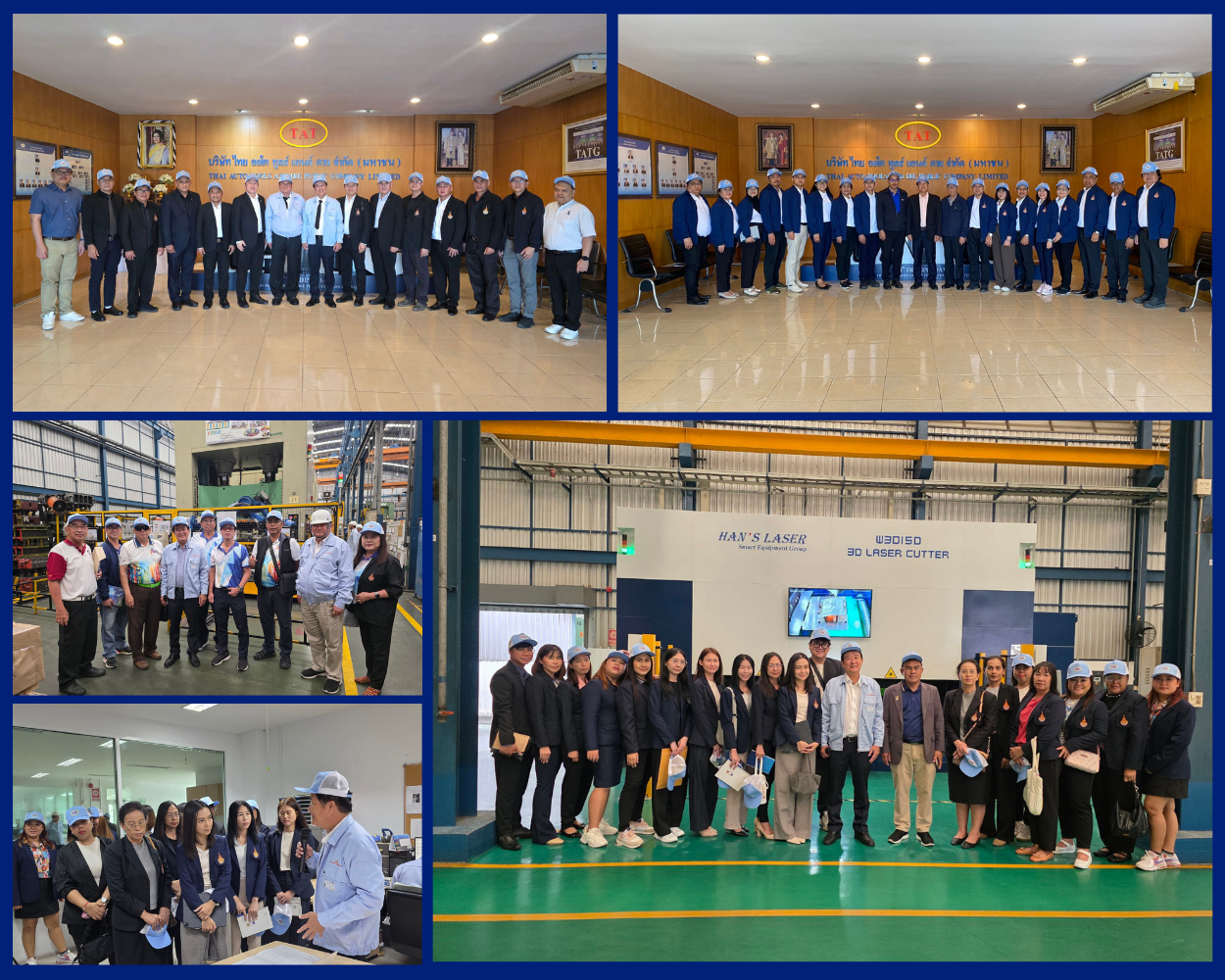
1. Provide opportunities for educational institutions and various organizations to visit the group of companies.
To share knowledge and skills in manufacturing and engineering, the company has provided an opportunity for educational institutions to visit and observe the production of tools used in automotive parts production, as well as the production line of automotive press parts, including the technology used in automotive production. In 2025, 6 educational institutions and organizations visited the company group, consisting of 3 educational institutions and 3 various organizations.
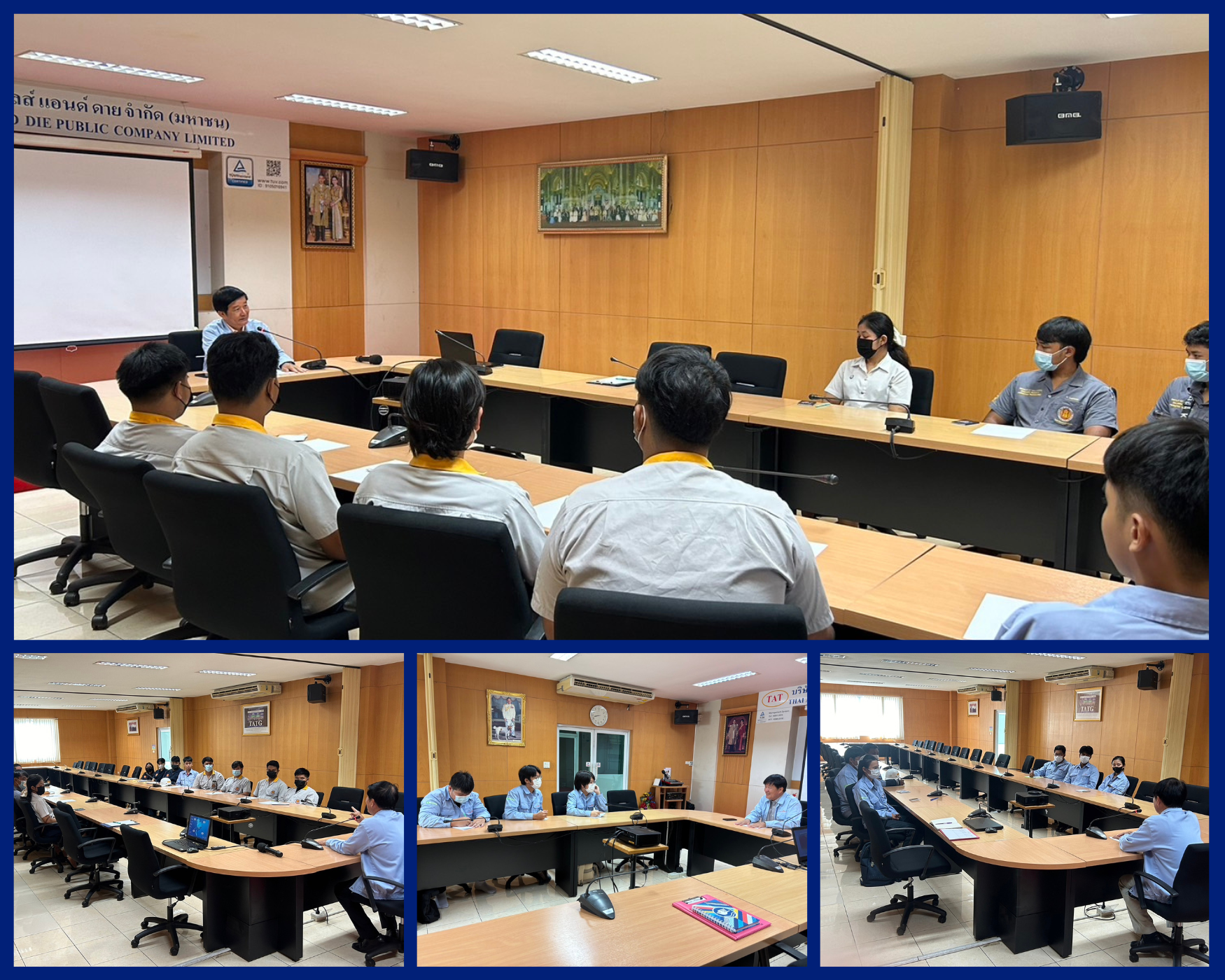
2. Internship Program
The group of companies has opened up to trainees and cooperative students from various educational institutions to train within the group, to increase their knowledge and practical skills in various fields. In 2568, students were admitted to internship programs from 5 educational institutions.
3. Organizing activities with the nearby community
Due to the company's emphasis on community activities in the province where it is located, it has coordinated with local agencies to support various activities in Pathum Thani province. In 2025, the company supported various community activities by considering the support from the project's objectives as follows:
1. Project to carry on the tradition of Songkran and National Elderly Week
Project objective: To promote Thai culture and traditions and to foster good relationships within families and communities.
2. Project to support the International Disability Event in Pathum Thani Province
Project objective: To promote good relationships among the community members to prevent division.
3. Support the National Children's Day project for the year 2568.
Project objective: To support activities for children and build good relationships in the community.
Law Violation Incidents
Law Violation Incidents
| Metric | Current Year | Previous Year | Two Years Ago |
|---|---|---|---|
| The total number of cases or incidents of significant violations of laws or regulations regarding social and human rights (Cases) | 0 | 0 | 0 |
| The total number of cases or incidents that cause significant labor disputes (Cases) | 0 | 0 | 0 |
| The total number of cases or complaints related to consumer rights violations (Cases) | 0 | 0 | 0 |
| The total number of cases or complaints related to partner rights violations (Cases) | 0 | 0 | 0 |
| The total number of cases or incidents that cause disputes with the community/society (Cases) | 0 | 0 | 0 |
| The total number of cases or incidents related to cyber security or customer data breaches (Cases) | 0 | 0 | 0 |
| The total number of cases or incidents related to safety and occupational health at work (Cases) | 0 | 0 | 0 |